CertificatesPass a module quiz, earn a verifiable certificate you can add to LinkedIn — free account. Create free account ↗
Steel Learning
Learning Modules
Master the processes behind global steel production, then navigate directly to the real plants using each route.
View process map →Start here — free

Steel Manufacturing Process: How Steel Is Made
The steel manufacturing process explained — the full route from iron ore and scrap through ironmaking, steelmaking, casting and rolling to finished steel.

Blast Furnace Ironmaking
How iron ore, sinter, coke, and pulverised coal are converted to liquid hot metal in a counter-current shaft furnace by reducing iron oxides with carbon monoxide generated at tuyere-level combustion zones called raceways.

Basic Oxygen Furnace (BOF) Steelmaking
How liquid iron from the blast furnace is converted to steel by top-blowing high-purity oxygen through a water-cooled lance, oxidising carbon, silicon, manganese, and phosphorus in a single high-intensity heat.
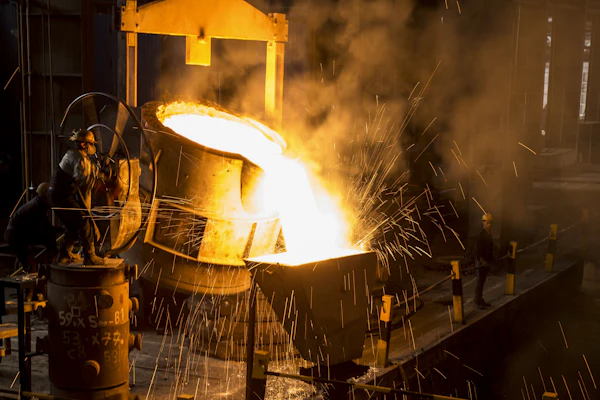
Ladle Furnace (LF) — Secondary Metallurgy
How steel tapped from the BOF or EAF is reheated, desulphurised, and precisely alloyed in a ladle furnace to meet tight composition and temperature targets before continuous casting.

Continuous Casting
How liquid steel from the ladle is solidified into semi-finished slabs, blooms, billets, or beam blanks in a continuous casting machine, replacing the batch ingot casting process and improving yield to over 97%.

Hot Rolling
How continuously cast slabs, blooms, and billets are reheated to rolling temperature and reduced to final product dimensions — hot rolled coil, plate, sections, and rod — in a hot strip mill, plate mill, or section mill.
Learning Pathways
Integrated Steelmaking Route
BF → BOF → LF → CC → HR
The dominant global route — iron ore to hot-rolled coil via blast furnace and BOF. Accounts for ~70% of world steel production.
5 modules →
Electric Arc Furnace Route
EAF → LF → CC → CR
The scrap-based route — lower capital cost and carbon footprint than integrated steelmaking. Produces flat products for automotive and appliance markets.
4 modules →
Green DRI-EAF Route
DRI → EAF → LF → CC
The emerging low-carbon route — direct reduction with natural gas or hydrogen followed by EAF steelmaking. Near-zero CO₂ with green hydrogen.
4 modules →
Long Products Route
EAF → LF → CC → Bar/Rod → Section
The scrap-based route to rebar, wire rod, and structural sections — EAF steelmaking through to long products rolling.
5 modules →
Casting Equipment Deep-Dive
Tundish → Caster → CC → Defects → Refractories → Ingot
Equipment-focused deep dive for casters and metallurgists working on caster performance and quality — from tundish flow design to the machine, its defects, and the ingot route.
6 modules →
Steel Quality & Grades
Analysis → Testing → Slag → Inclusions → Alloying → VD → Grades
Quality and grade selection from lab through to end-use specifications — how steel is sampled, tested, refined clean, and matched to the industries that order it.
7 modules →
Ironmaking
Blast Furnace Ironmaking
How iron ore, sinter, coke, and pulverised coal are converted to liquid hot metal in a counter-current shaft furnace by reducing iron oxides with carbon monoxide generated at tuyere-level combustion zones called raceways.
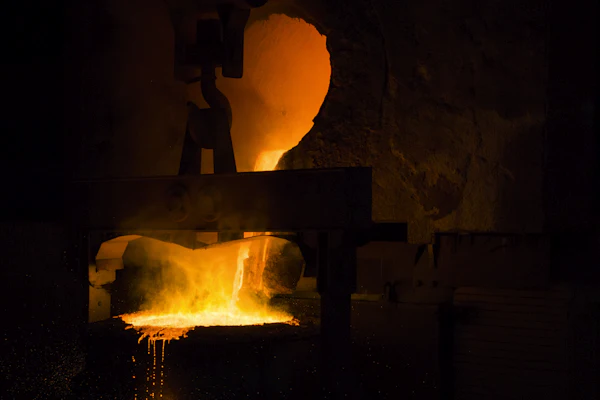
Direct Reduction (DRI / HBI)
How iron ore pellets are reduced to metallic iron in the solid state — without melting — using reformed natural gas or hydrogen, producing DRI pellets or HBI briquettes for use as a high-quality EAF charge.
Steelmaking
Basic Oxygen Furnace (BOF) Steelmaking
How liquid iron from the blast furnace is converted to steel by top-blowing high-purity oxygen through a water-cooled lance, oxidising carbon, silicon, manganese, and phosphorus in a single high-intensity heat.

Electric Arc Furnace (EAF) Steelmaking
How steel scrap, direct reduced iron (DRI), and other metallic charge materials are melted and refined using the intense heat of electric arcs struck between graphite electrodes and the charge.
Secondary Metallurgy
Ladle Furnace (LF) — Secondary Metallurgy
How steel tapped from the BOF or EAF is reheated, desulphurised, and precisely alloyed in a ladle furnace to meet tight composition and temperature targets before continuous casting.
Vacuum Degassing (RH / VD)
How dissolved hydrogen, nitrogen, and carbon are removed from liquid steel by applying a high vacuum, enabling the production of ultra-low carbon grades, high-cleanliness steels, and hydrogen-crack-free heavy plate.
Casting
Continuous Casting
How liquid steel from the ladle is solidified into semi-finished slabs, blooms, billets, or beam blanks in a continuous casting machine, replacing the batch ingot casting process and improving yield to over 97%.
Continuous Caster Machine Design
The machine behind the process — caster archetypes and radius selection, the mould as a heat-transfer instrument, oscillation, level control, and the segment-by-segment engineering of containment, cooling, and soft reduction.
Ingot Casting
The route that refuses to die — why heavy forgings and special grades still solidify in moulds, how uphill teeming and hot-top practice work, what segregation does inside a big ingot, and where ESR/VAR remelting takes over.
Tundish Design & Refractory Lining
The caster's unsung vessel — how tundish geometry, flow control furniture, refractory lining systems, and sequence operations turn a holding box into the last refining stage before the mould.
Rolling
Hot Rolling
How continuously cast slabs, blooms, and billets are reheated to rolling temperature and reduced to final product dimensions — hot rolled coil, plate, sections, and rod — in a hot strip mill, plate mill, or section mill.
Bar & Rod Rolling
How billets are rolled into rebar, wire rod, and special bar quality steel — including QST quenching, Stelmor cooling, and EAF mini-mill dominance in long products.

Cold Rolling
How hot-rolled pickled coil is reduced to final gauge at room temperature in a tandem or reversing cold mill, then annealed and temper rolled to restore ductility and set surface finish for automotive, appliance, and packaging applications.
Section & Structural Rolling
How I-beams, H-columns, rails, and structural sections are rolled using universal mills — and the metallurgy behind structural steel grades.
Raw Materials
Cokemaking
How metallurgical coal is converted into blast furnace coke — the fuel, reductant, and structural support of the ironmaking process.
Pelletisation
How iron ore concentrates are formed into spherical pellets for blast furnace or direct reduction use — and why DR-grade pellet quality is critical for green steel.
Sintering
How iron ore fines are converted into a porous, pre-fluxed sinter for charging to the blast furnace.
Finishing
Hot-Dip Galvanising
How cold-rolled steel is coated with zinc for corrosion protection — the dominant surface treatment for automotive body panels, construction, and appliances.
Tin & Electrolytic Coating
How electrolytic tinning lines produce tinplate for food and beverage cans — and how the process differs from hot-dip coating.
Chemistry
Mechanical & NDT Steel Testing
How steel proves what it claims — tensile, hardness and Charpy testing, toughness and weldability assessment, and the non-destructive methods (UT, MPI, eddy current, automated surface inspection) that examine the steel actually shipped.
Sample Analysis & Lab Methods
How a 300-tonne heat is judged from a 30-gram sample — immersion sampling, spark OES, combustion and gas fusion analysis, referee methods, and the lab quality systems behind every mill certificate.
Slag Chemistry & Metallurgy
The other liquid in every furnace — how slag structure, basicity, and oxidation state control dephosphorisation, desulphurisation, foaming, and steel cleanness from the BOF to the caster.
Fundamentals
Steel Manufacturing Process: How Steel Is Made
The steel manufacturing process explained — the full route from iron ore and scrap through ironmaking, steelmaking, casting and rolling to finished steel.
Alloying Additions & Effects
How Mn, Cr, Ni, Mo, Nb, V, and Ti change steel properties — and the trade-offs between strength, toughness, weldability, and cost that drive alloy design.
Continuous Casting Defects
The causes and countermeasures for the key defects in continuous casting — from breakouts to centreline segregation and surface cracks.

Inclusions & Clean Steel
The origin, types, and effects of non-metallic inclusions in steel — and how clean steelmaking practice controls them to achieve bearing, tyre cord, and pipeline quality.
Refractories in Steelmaking
The ceramic materials that make liquid steel containment possible — MgO-C brick, ladle campaign management, SEN design, and why refractories are a critical cost and safety factor.
Steel Grades by Industry
What a steel grade actually is — and how construction, automotive, energy, shipbuilding, and machinery each turned their failure modes into the grade families, naming systems, and property packages the mills produce.
Advancing Technologies
AI & Digital Technology in Steelmaking
How machine learning, digital twins, and predictive analytics are being applied across the steelmaking process — from BF silicon prediction to BOF endpoint control and surface inspection.
Hydrogen in Steelmaking
The decarbonisation route every serious observer is watching — how hydrogen reduces iron ore with water as the only by-product, the projects proving it (HYBRIT, Stegra, HYFOR), blast-furnace injection, and the green-hydrogen economics and ore constraints that decide whether it scales.